What began as a lesser known colonial movement is quietly reshaping the landscapes we call home. A little bit of elsewhere, finding its way here. Crossing boundaries. Taking root.
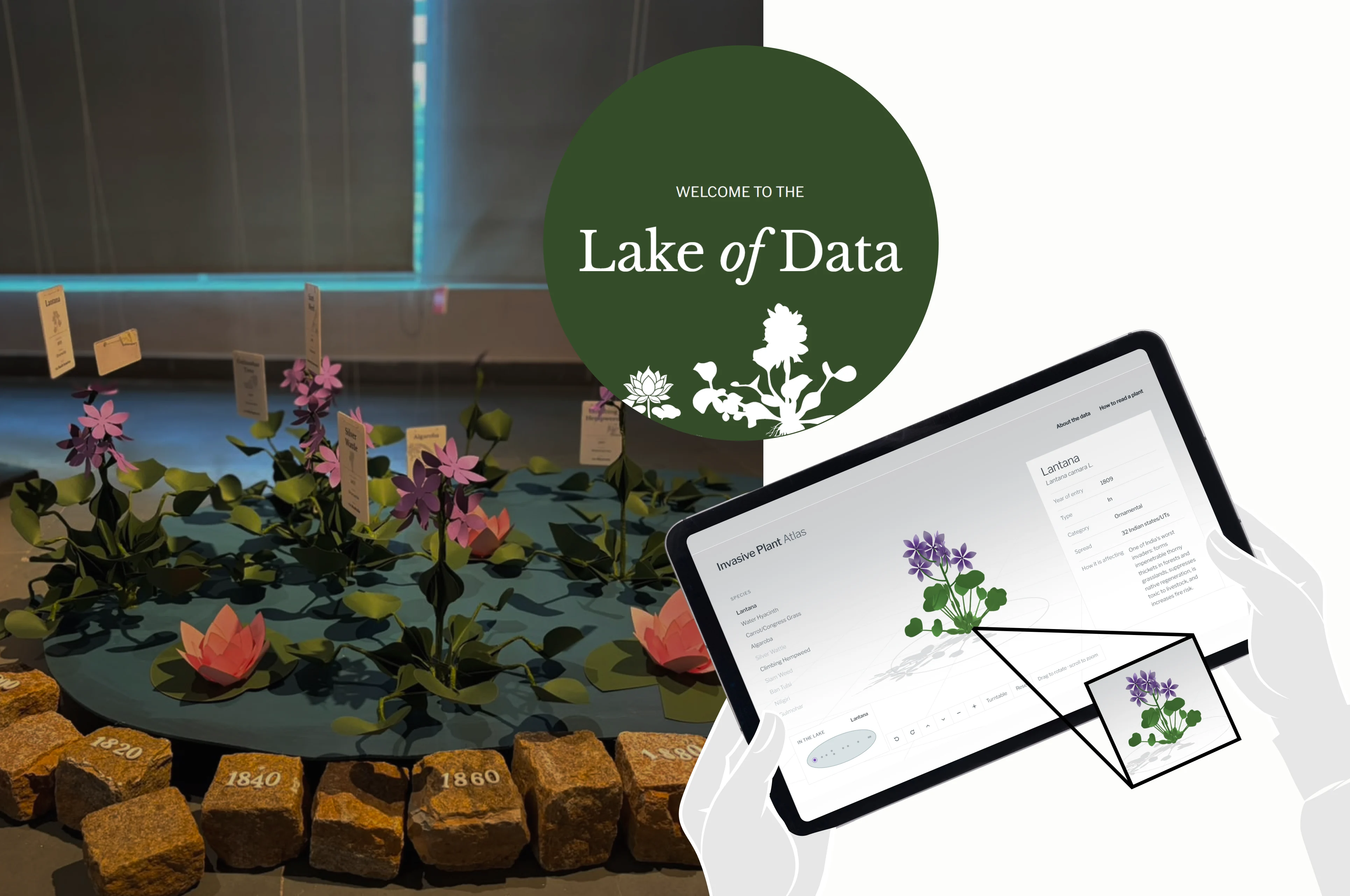
Lake of Data
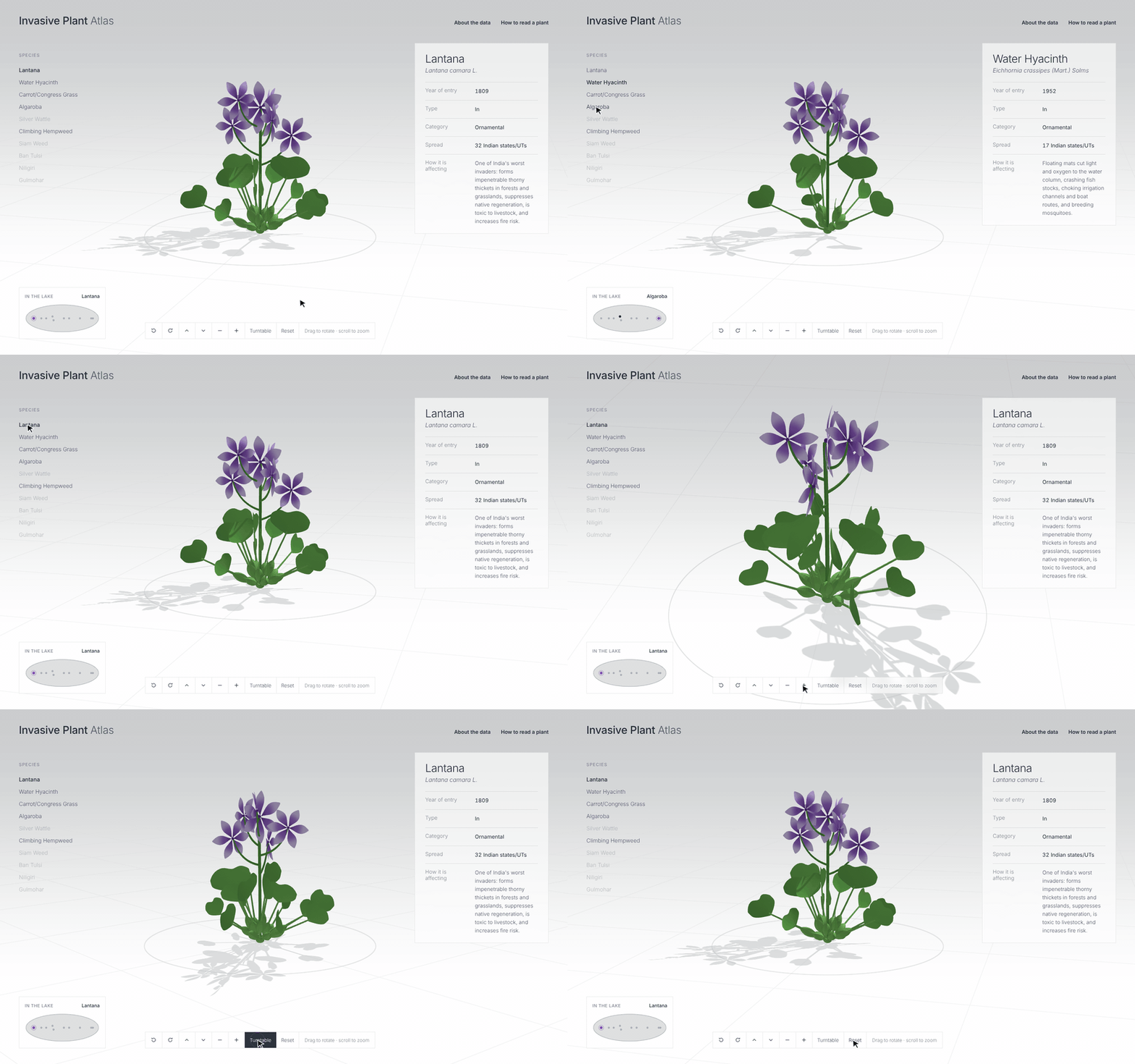
A tangible data visualisation exhibit, with a tablet interface to explore each invasive species.
Objective and problem
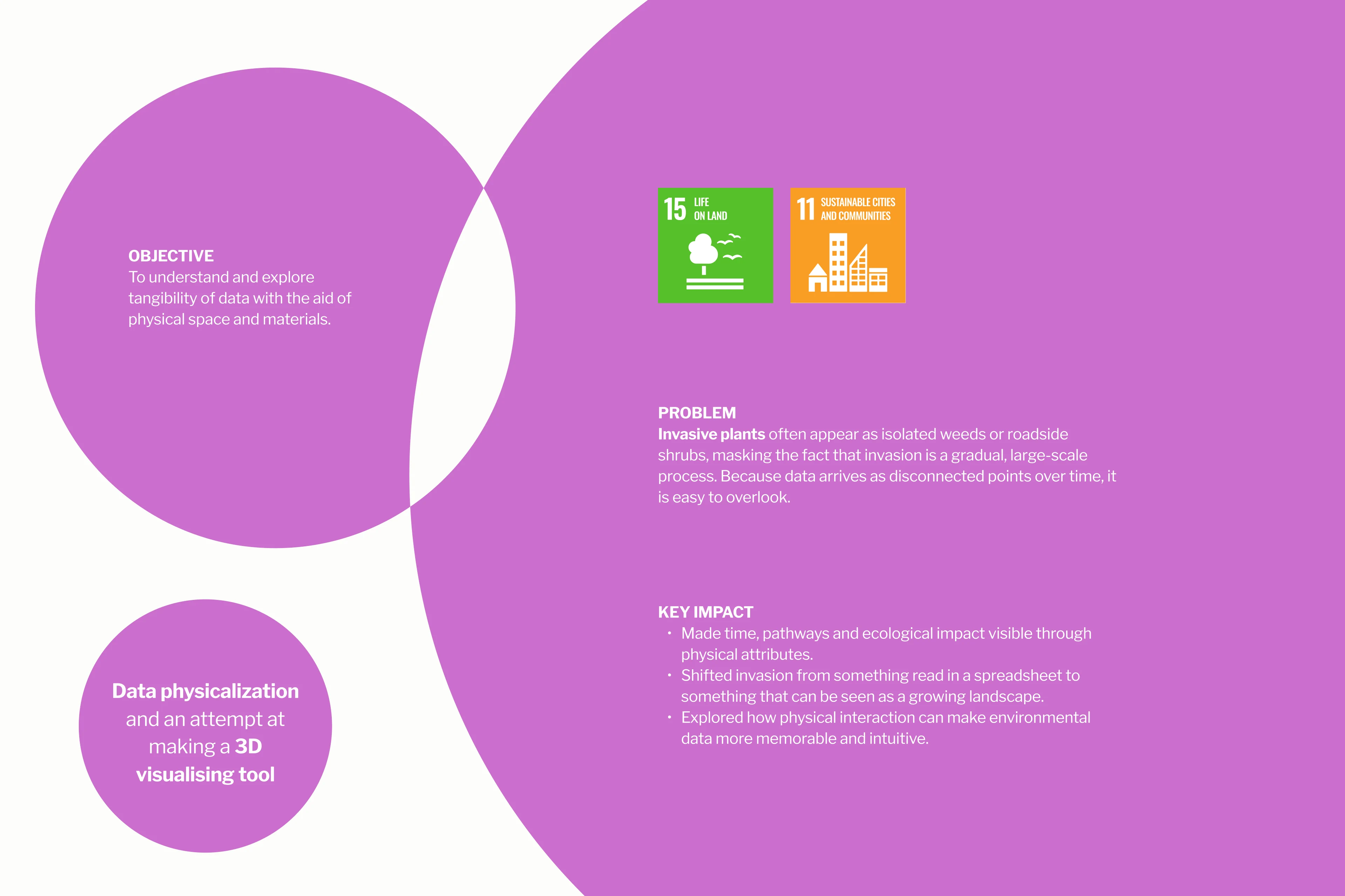
Objective: to understand and explore tangibility of data with the aid of physical space and materials. Problem: invasive plants often appear as isolated weeds or roadside shrubs, masking the fact that invasion is a gradual, large-scale process. Because data arrives as disconnected points over time, it is easy to overlook. Key impact: made time, pathways and ecological impact visible through physical attributes; shifted invasion from something read in a spreadsheet to something that can be seen as a growing landscape; explored how physical interaction can make environmental data more memorable and intuitive.
Before the invasion
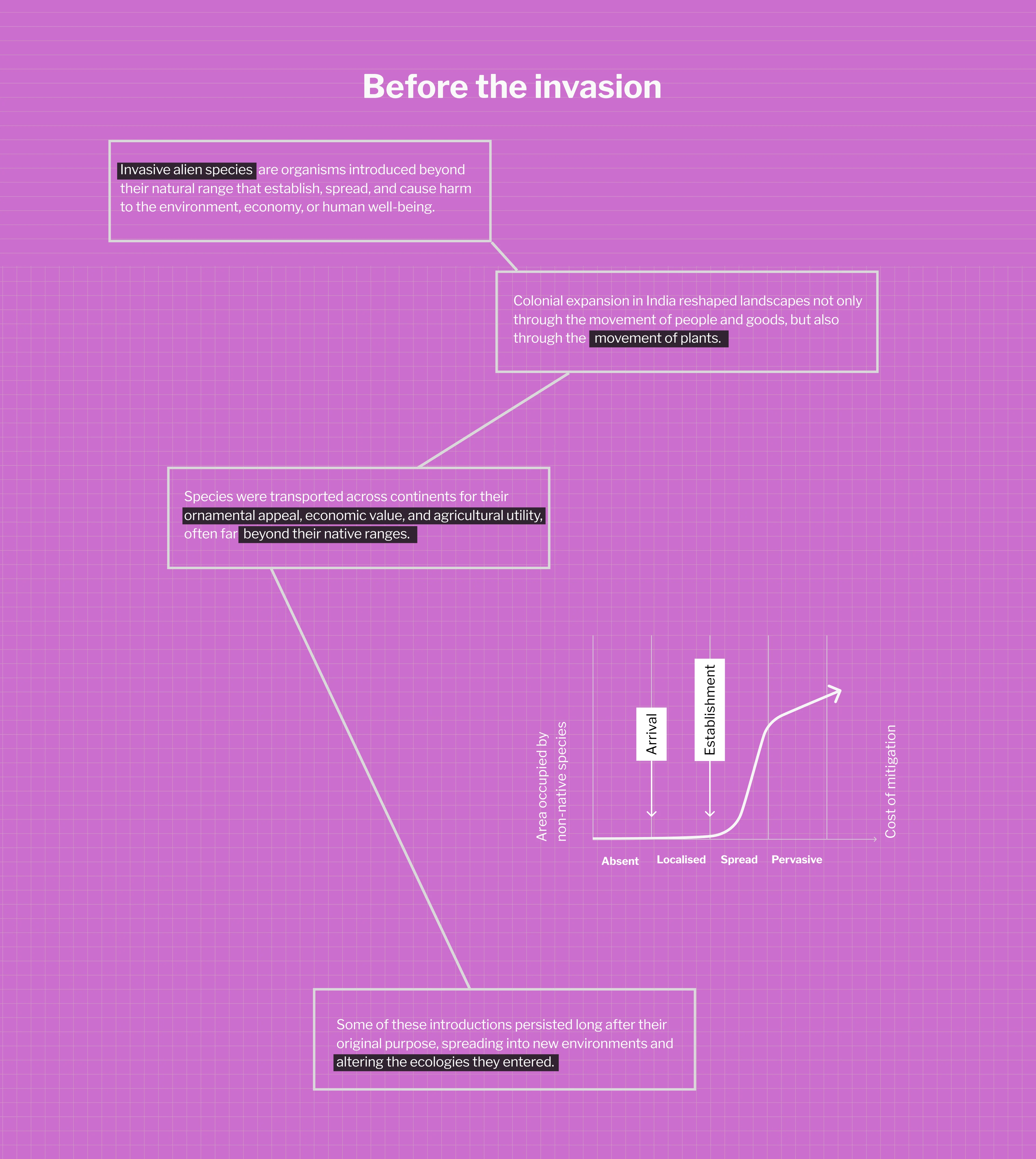
Invasive alien species are organisms introduced beyond their natural range that establish, spread, and cause harm to the environment, economy, or human well-being. Colonial expansion in India reshaped landscapes not only through the movement of people and goods, but also through the movement of plants. Species were transported across continents for their ornamental appeal, economic value, and agricultural utility, often far beyond their native ranges. Some of these introductions persisted long after their original purpose, spreading into new environments and altering the ecologies they entered.
According to the World Conservation Union, invasive alien species are the second most significant threat to biodiversity, after habitat loss.
Setting the scene
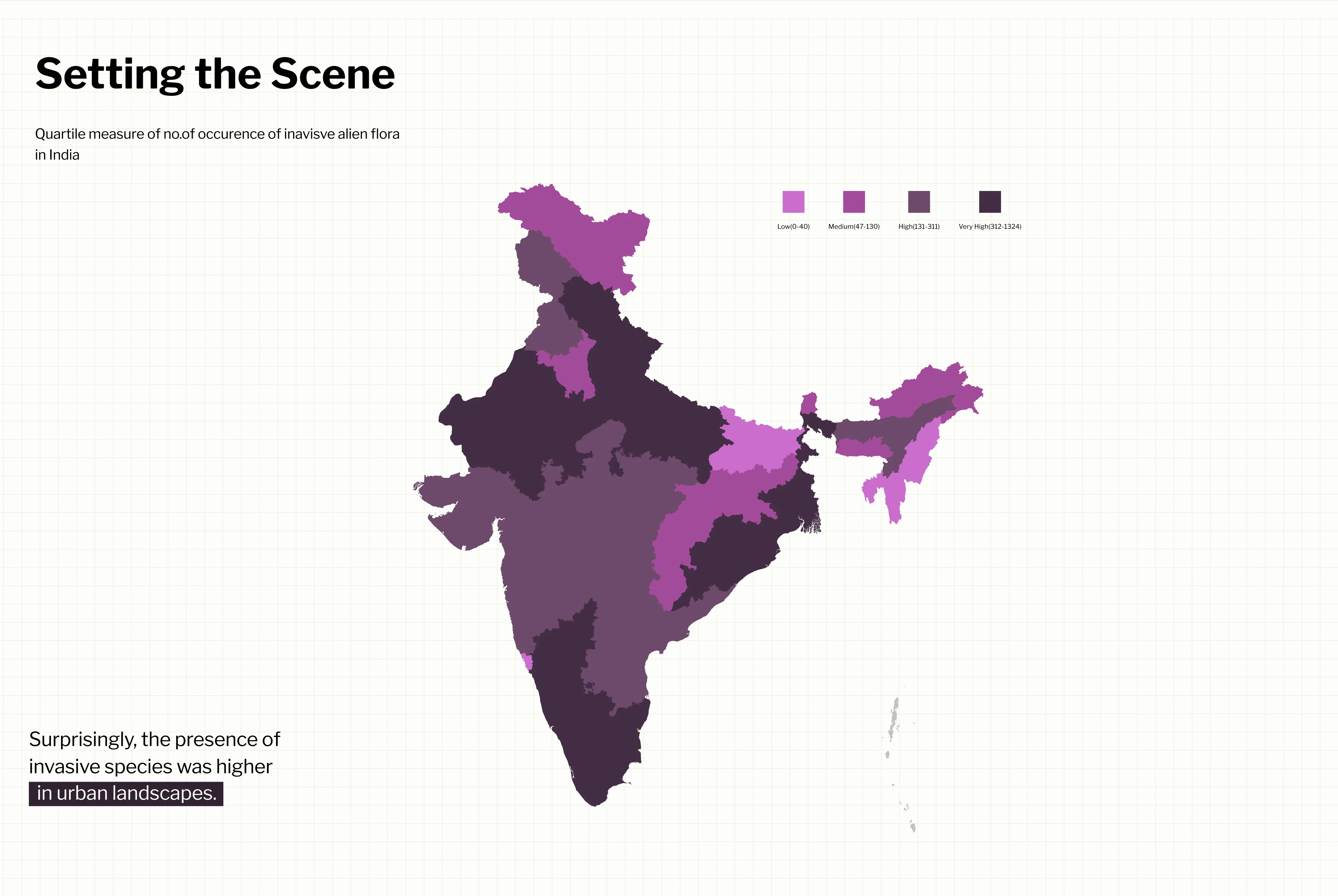
Quartile measure of the number of occurrences of invasive alien flora in India. Surprisingly, the presence of invasive species was higher in urban landscapes.
Tracing origins
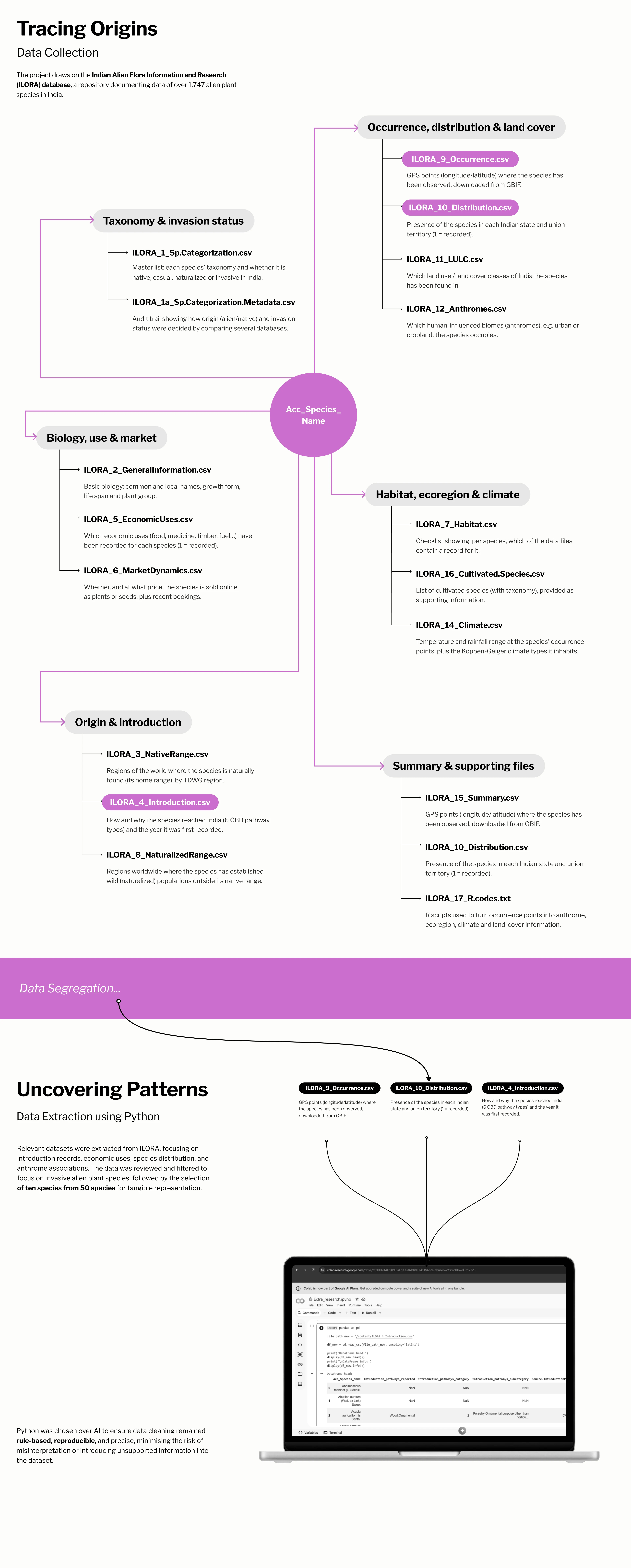
Data collection. The project draws on the Indian Alien Flora Information and Research (ILORA) database, a repository documenting data of over 1,747 alien plant species in India.
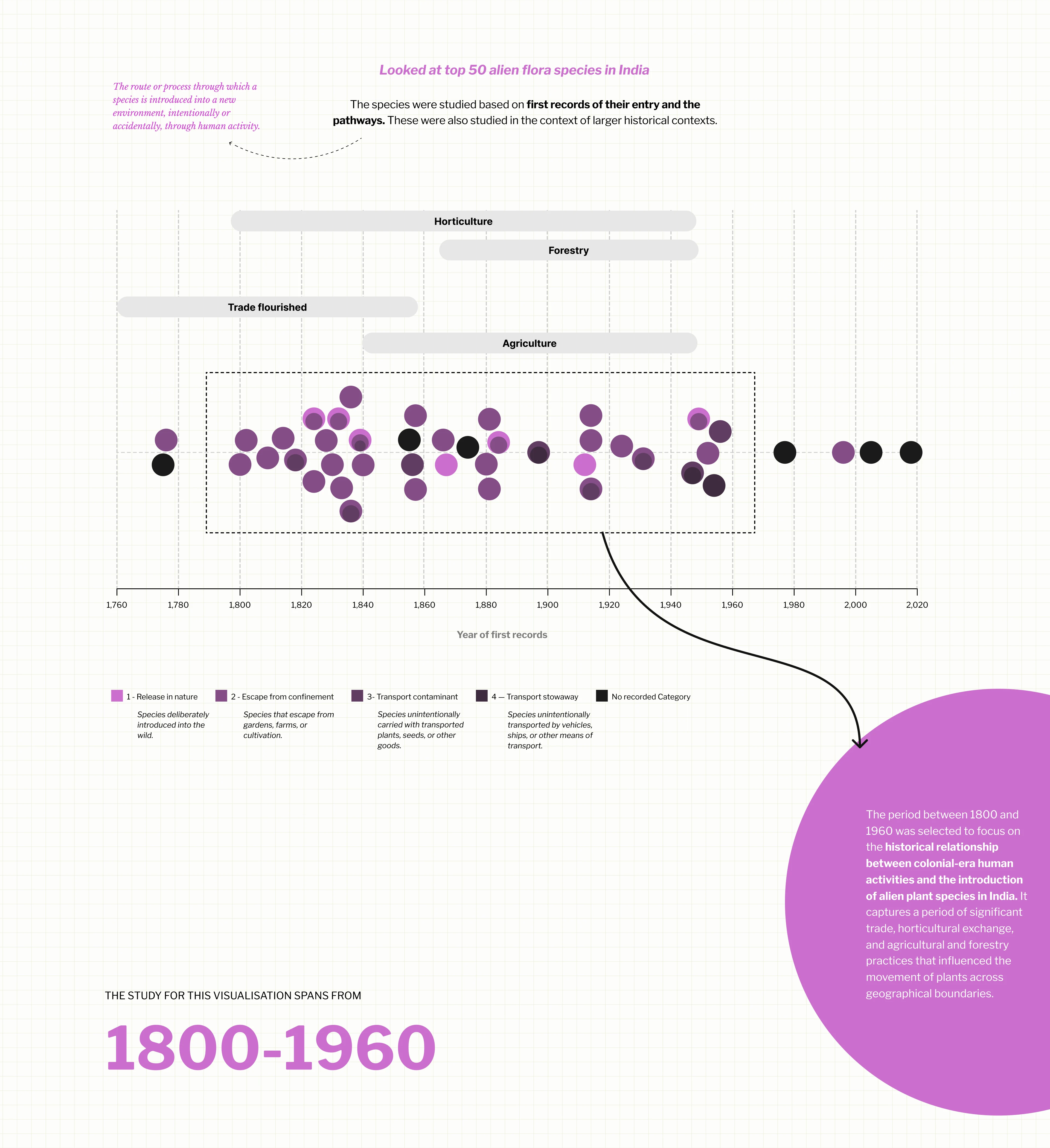
Looked at top 50 alien flora species in India
The species were studied based on first records of their entry and the pathways. These were also studied in the context of larger historical contexts. The period between 1800 and 1960 was selected to focus on the historical relationship between colonial-era human activities and the introduction of alien plant species in India.
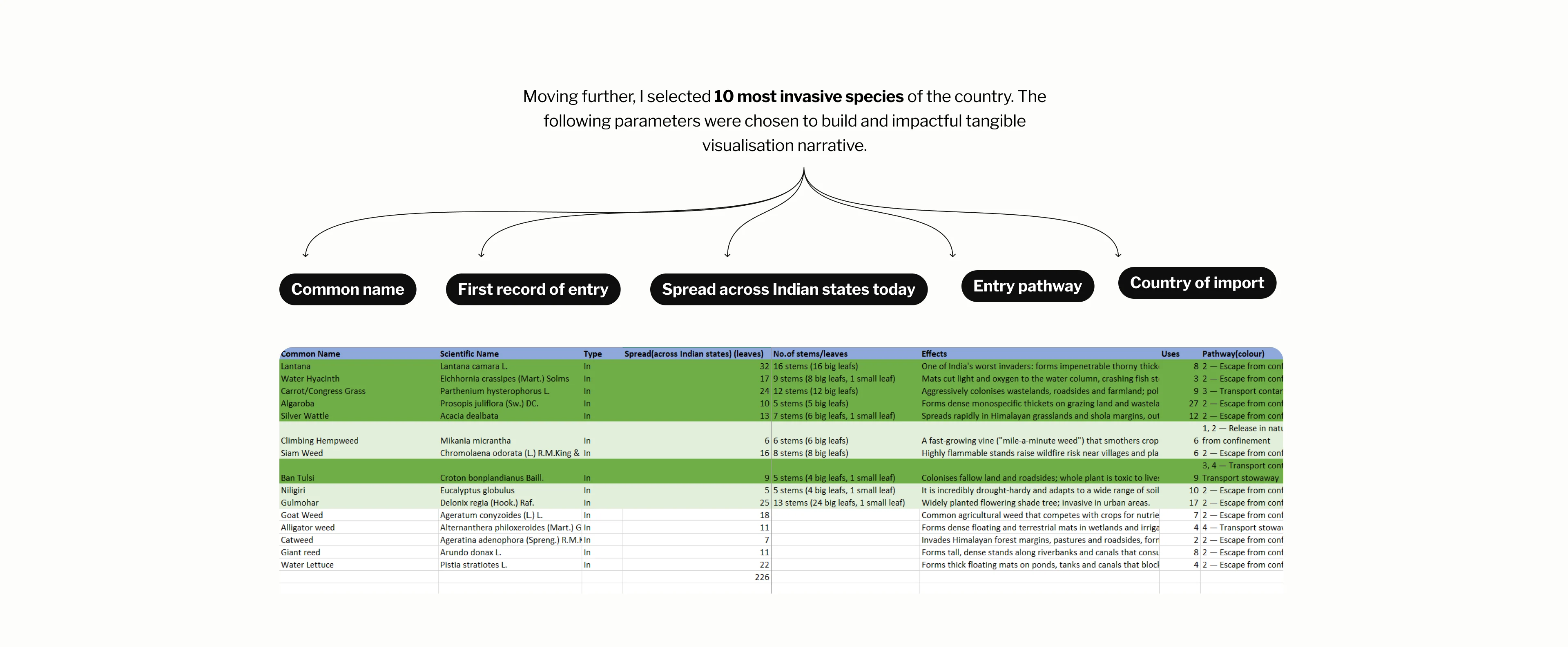
Selecting ten species
I selected the 10 most invasive species of the country, chosen to build and inspect the tangible visualisation, using these parameters: common name, first record of entry, spread across Indian states today, entry pathway, and country of import.
Signs of invasion
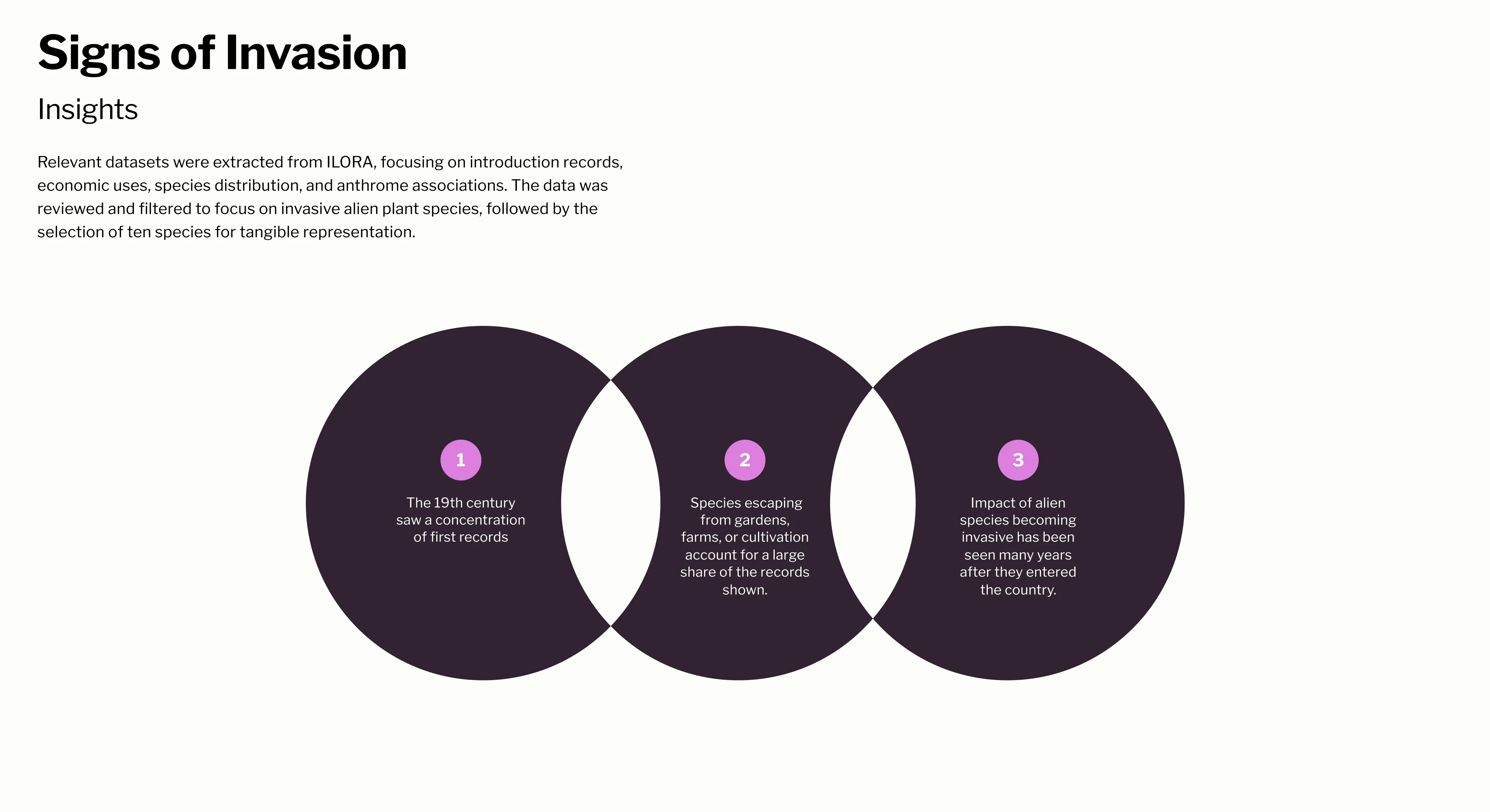
Relevant datasets were extracted from ILORA, focusing on introduction records, economic uses, species distribution and anthrome associations. The data was reviewed and filtered to focus on invasive alien plant species, followed by the selection of ten species for tangible representation. 1. The 19th century saw a concentration of first records. 2. Species escaping from gardens and plantation accounted for a large share of the records chosen. 3. Impact of alien species becoming visible once they had been in the country for many years.
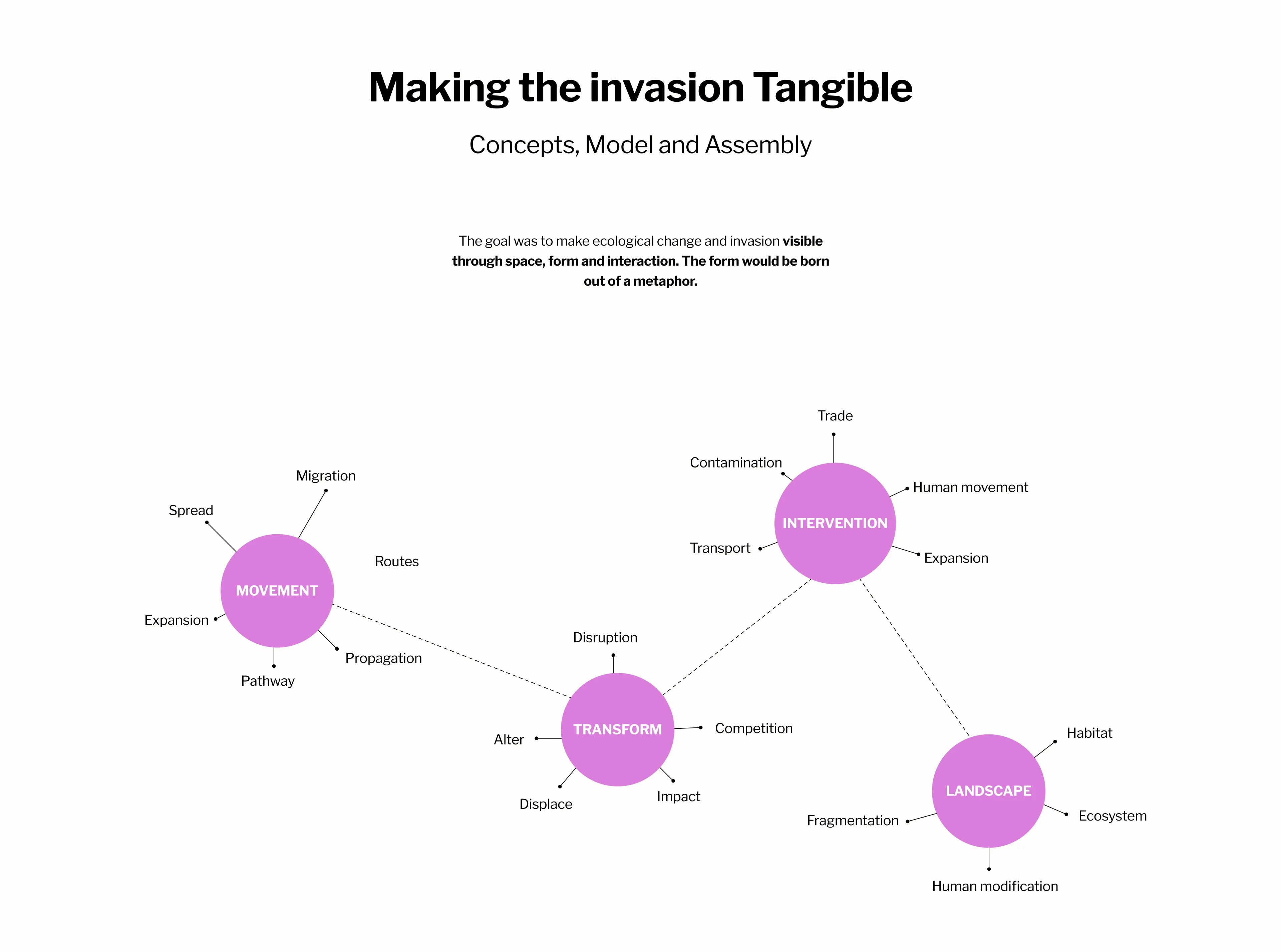
Making the invasion tangible
The goal was to make ecological change and invasion visible through space, form and interaction. Concepts: movement, intervention, transform, landscape.
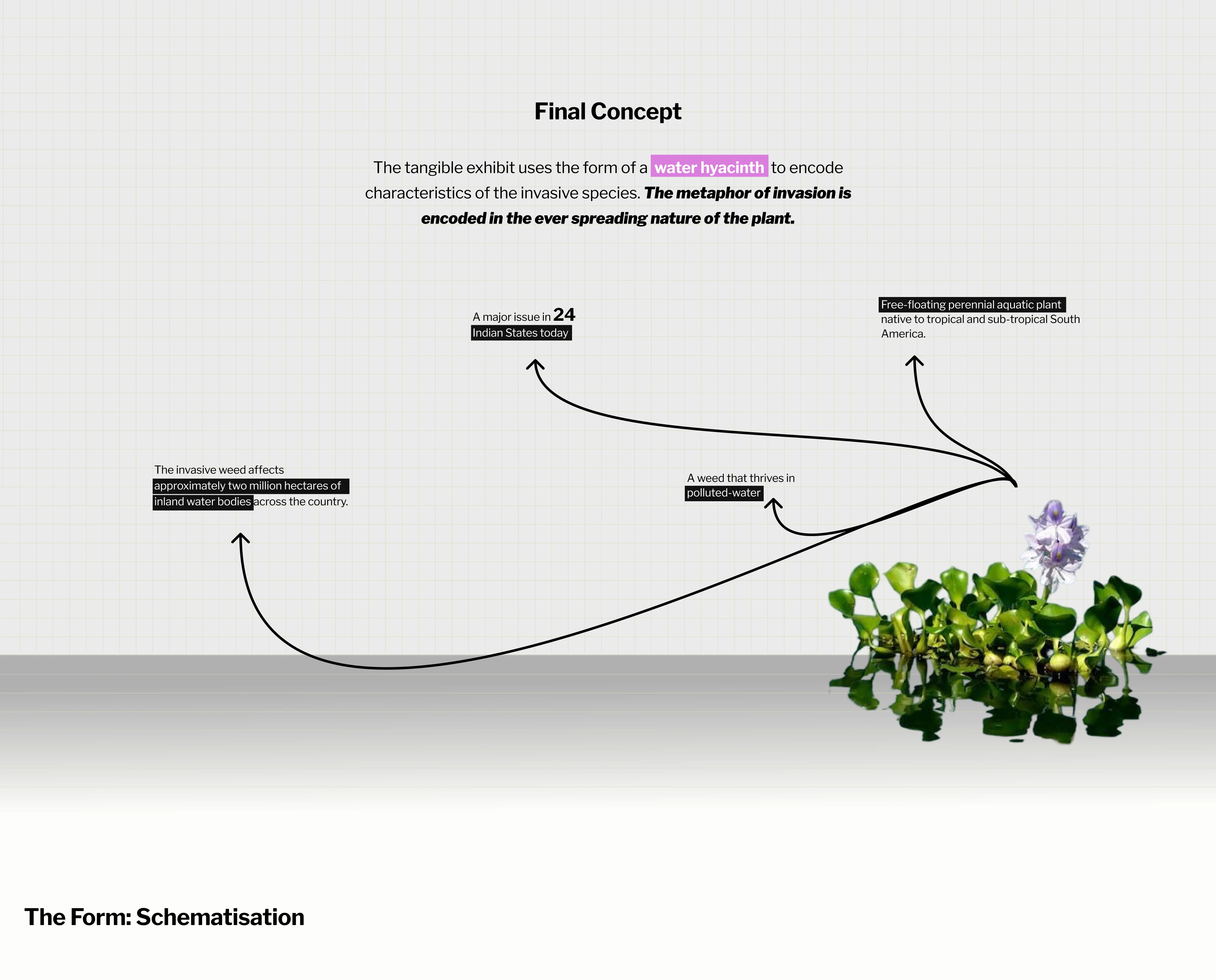
Final concept
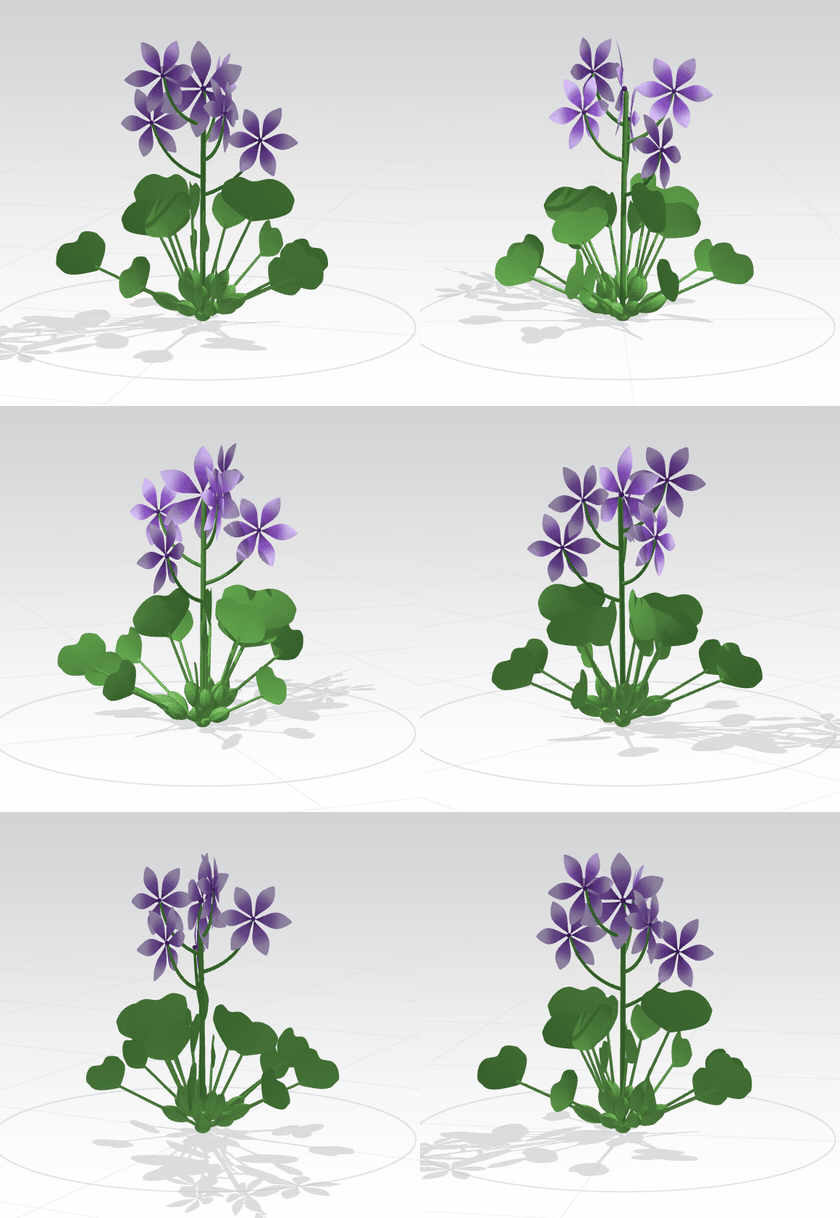
The tangible exhibit uses the form of a water hyacinth to encode characteristics of the invasive species. The metaphor of invasion is encoded in the ever spreading nature of the plant. The form: schematisation.
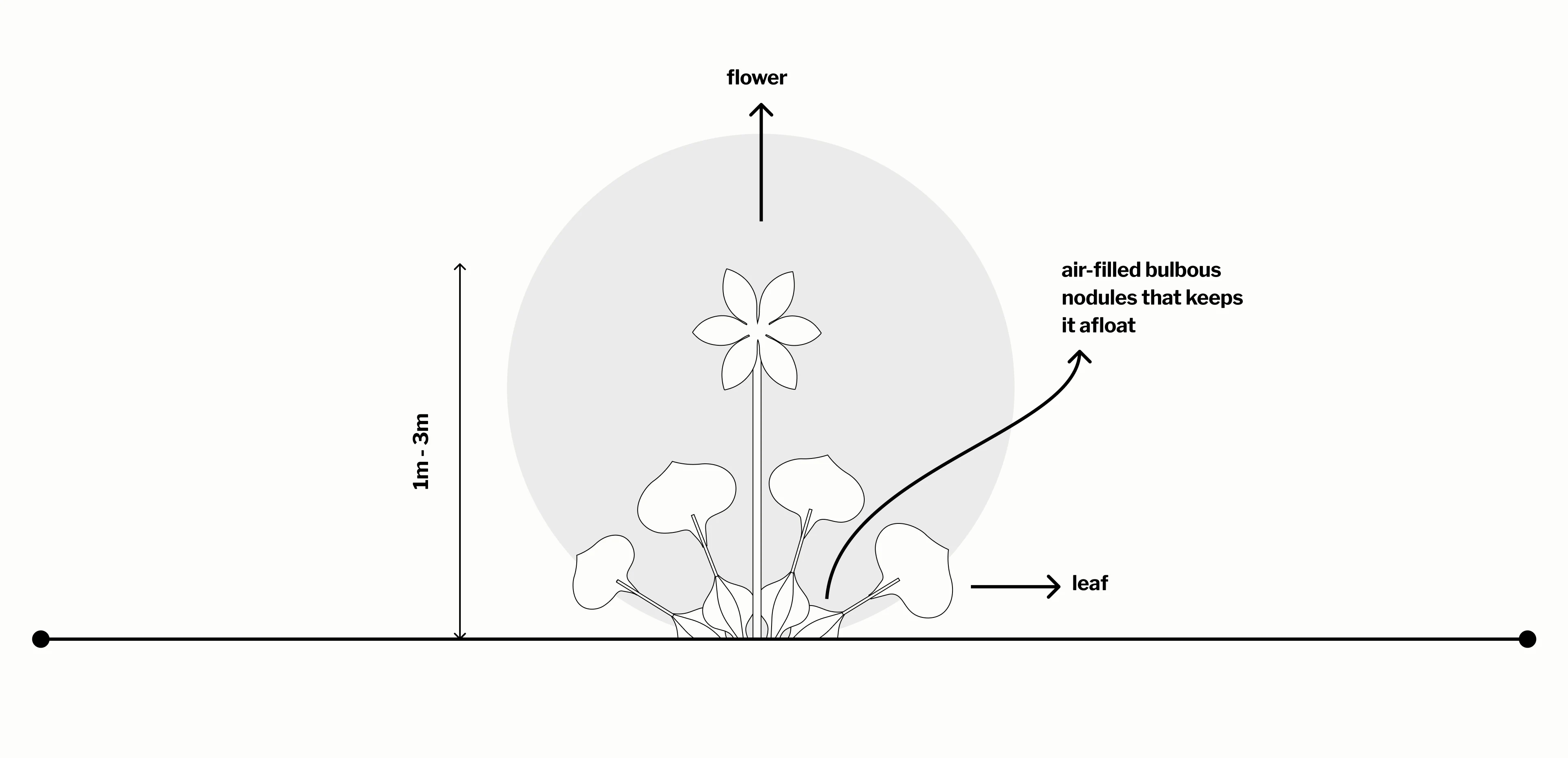
The form: schematisation
Schematic of the water hyacinth form, with its leaves, flowers and roots mapped to species data.
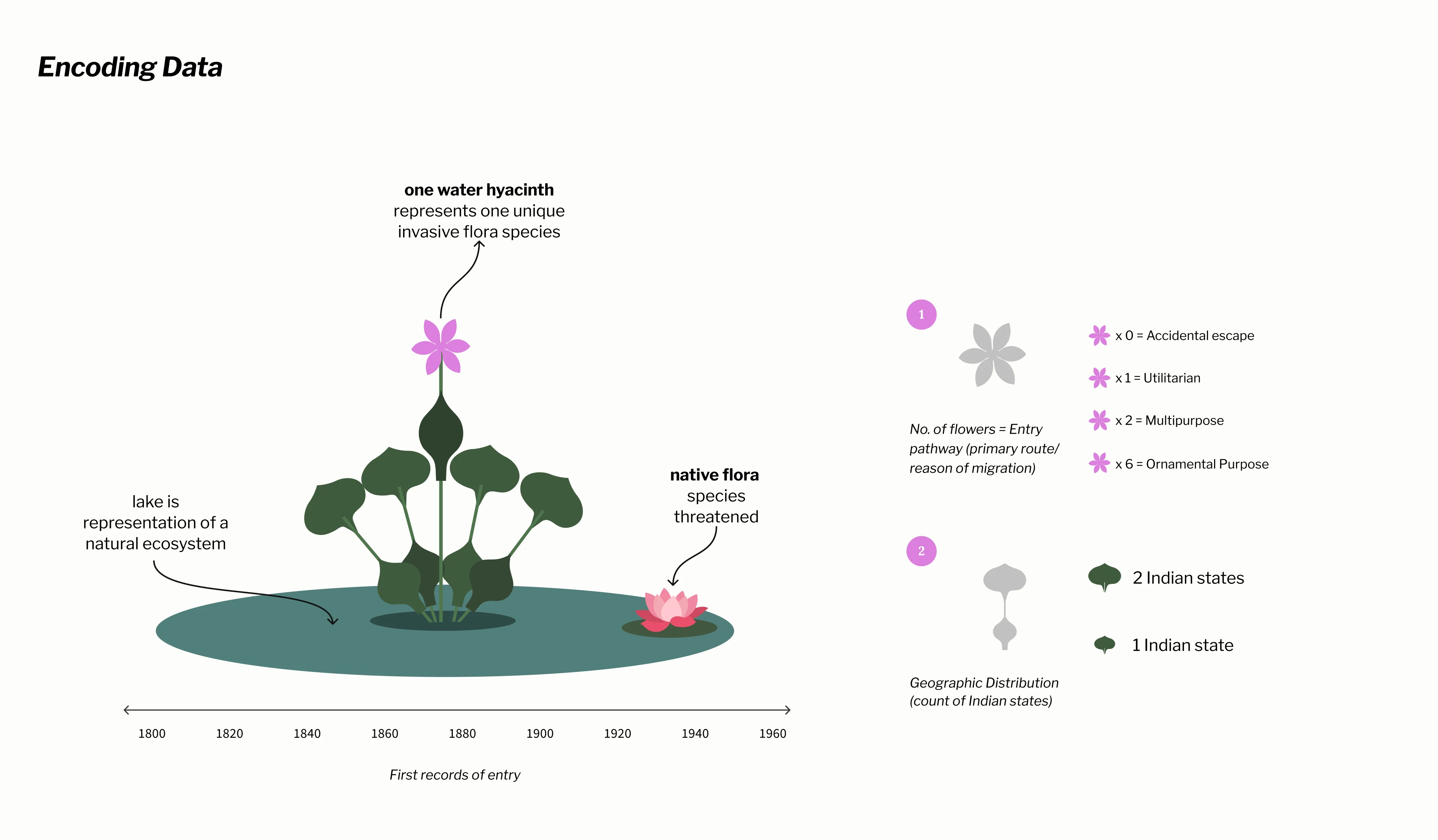
Encoding data
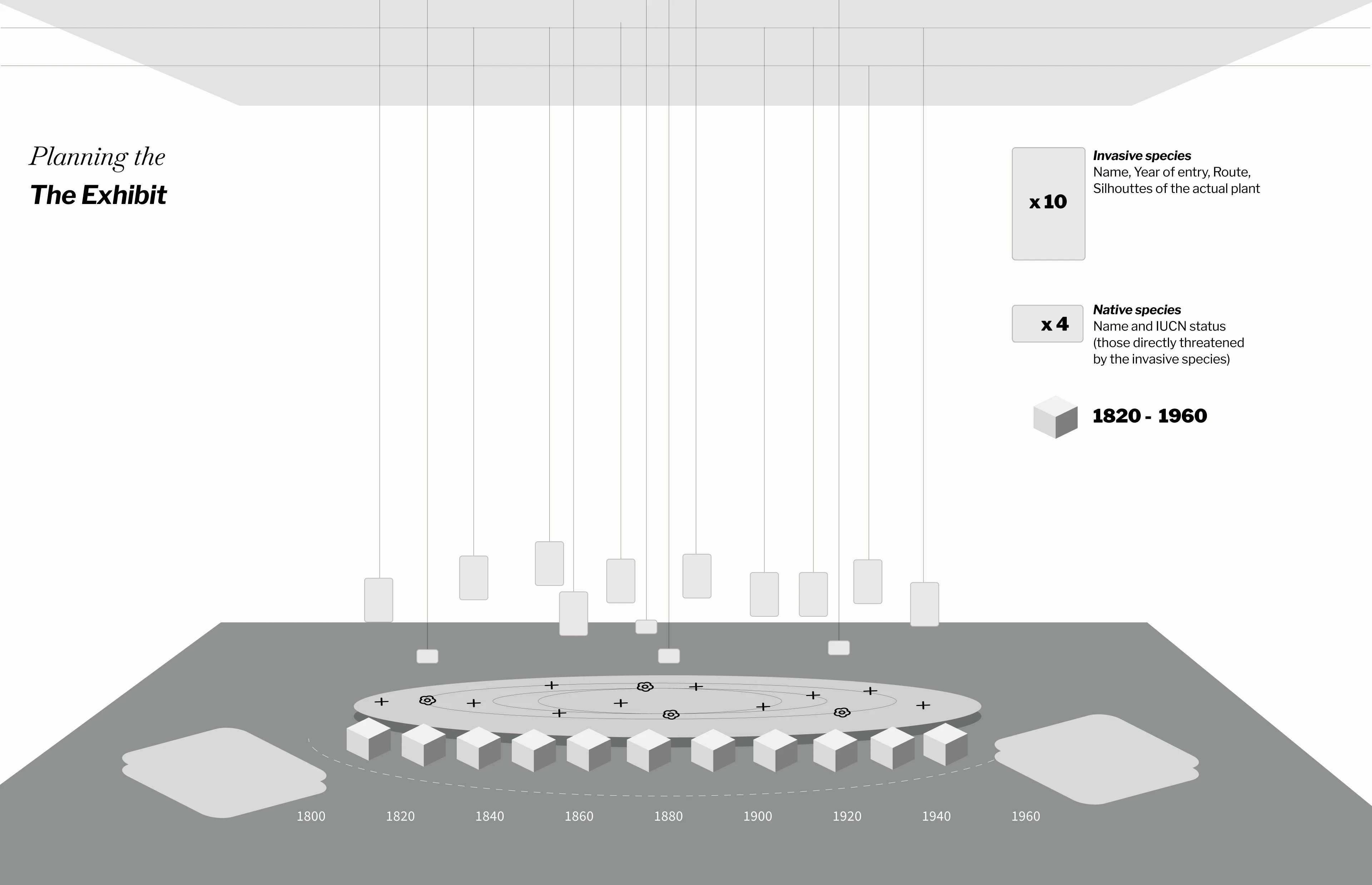
One water hyacinth represents one unique invasive flora species. The lake is a representation of a natural ecosystem. Native flora species threatened are shown as lotus flowers. The number of flowers equals the entry pathway, and leaves and geographic distribution encode the number of Indian states affected.
The exhibit
Each invasive species is a hanging element, with its name, year of entry, and silhouette of the actual plant. Native species are shown with name and IUCN status. The timeline spans 1820 to 1960.
The experience
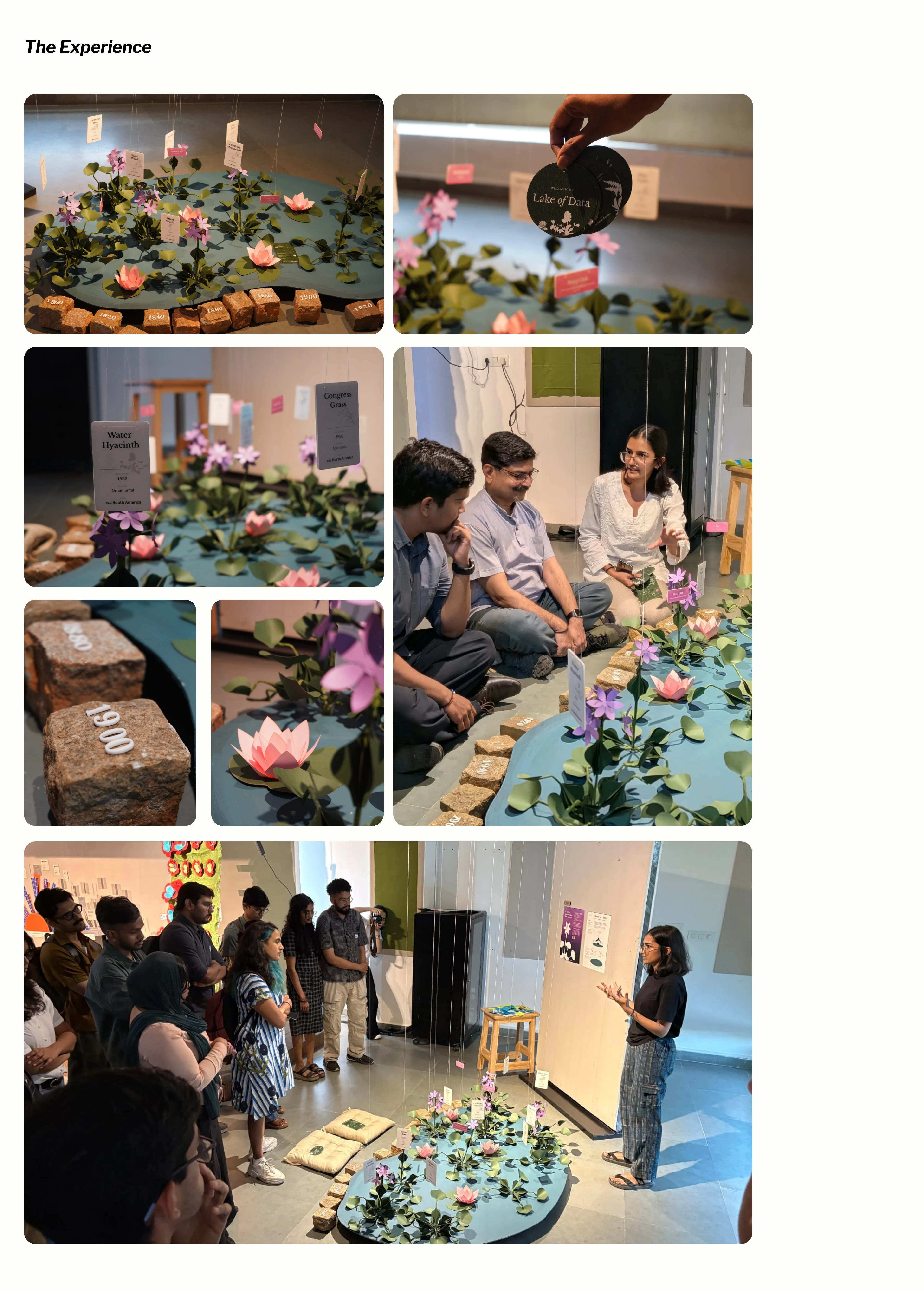
Photographs of the exhibit on display, with visitors handling the tangible models and discussing the species.
Behind the scenes
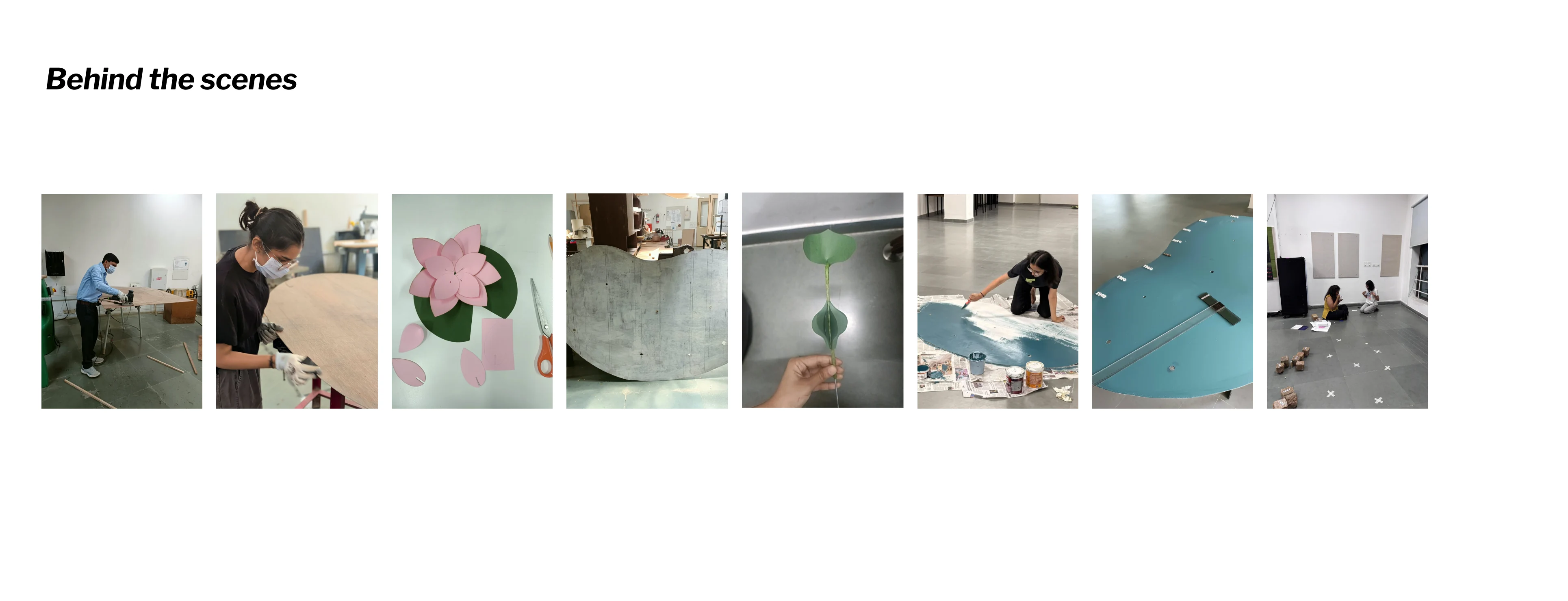
Process photographs from building the exhibit.

Reflections
As an information designer, the most rewarding part is uncovering the lesser-known and the hidden impacts, and translating these discoveries into forms that make them perceivable to others.
Resources
- Researchgate: Nonnative forest insects and pathogens in the United States, impacts and policy options
- ILORA Database
- Catalogue of invasive alien flora of India, Life Sciences Site
- Invasive Alien Flora, IUCN
- Mongabay India, interview by Achyut Kumar Banarjee